
Enrique Soto / Photo: Jorge Aguilar
Through hydrogen technologies, ESIME is advancing a robust, scalable solution with strong potential for industrial adoption.
Driven by progress in alkaline electrolysis technologies for hydrogen production, and its implementation as an alternative fuel that can be blended with diesel and gasoline, the National Laboratory SECIHTI in Hydrogen Technologies—led by the Instituto Politécnico Nacional (IPN)—is contributing to Mexico’s steady transition toward a sustainable energy future.
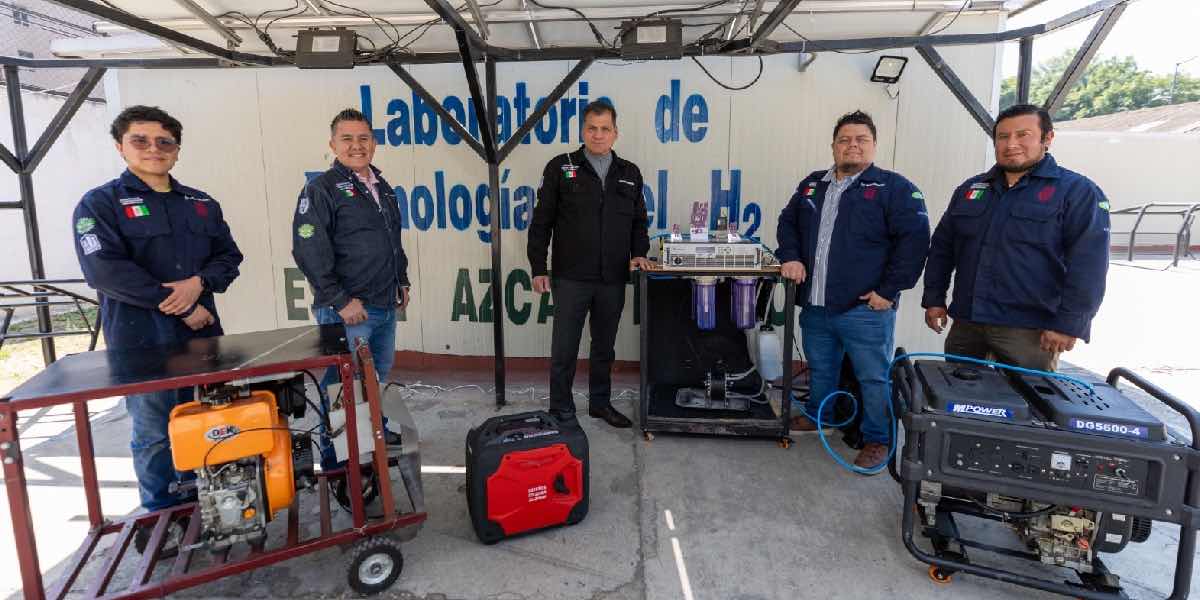
Juan Manuel Sandoval Pineda, PhD in Mechanical Engineering at IPN, leads the National Laboratory SECIHTI in Hydrogen Technologies (LANTH2), based at the Escuela Superior de Ingeniería Mecánica y Eléctrica (ESIME), Azcapotzalco Unit, with the support of a multidisciplinary team of researchers.
After three years of operation, the laboratory has achieved significant progress, positioning IPN as a leading institution in hydrogen technology development and in the training of highly specialized human capital in this strategic field, which is central to global energy transition efforts.
According to Dr. Sandoval Pineda, the technology developed at LANTH2 has reached Technology Readiness Level (TRL) 6 out of 9, based on the classification system used by the National Aeronautics and Space Administration (NASA).
“This means we have developed a mature, robust, and scalable technology that is ready for commercialization and industrial integration. Advancing to TRL 9 will require further certification and validation processes by specialized entities,” he explained.
He also noted that, as a result of advances in alkaline electrolysis processes, IPN has secured six intellectual property titles registered with the Mexican Institute of Industrial Property (IMPI) and the National Copyright Institute (INDAUTOR).
These include four industrial design registrations: Circular Electrode Optimization Model for Hydrogen Generation, Perimeter Housing Model for Electrodes, Output Reservoir Cap Model for Electrolyte/Oxyhydrogen, and Input Reservoir Cap Model for Electrolyte.
In addition, two software registrations have been obtained: Electrolyzer Sizing for Hydrogen Production in Pilot Plants and Galvanocontrol-Nitechmx.
Dr. Sandoval Pineda highlighted that blending high-purity hydrogen with diesel has yielded promising results with strong economic viability.
He added that while countries in Europe and Asia—such as Germany, Spain, China, and South Korea—currently lead hydrogen technology development, IPN continues to advance scientific research and graduate-level training to strengthen Mexico’s position in the global race toward hydrogen as a key energy source of the future.

INSTITUTO POLITÉCNICO NACIONAL
D.R. Instituto Politécnico Nacional (IPN). Av. Luis Enrique Erro S/N, Unidad Profesional Adolfo López Mateos, Zacatenco, Alcaldía Gustavo A. Madero, C.P. 07738, Ciudad de México. Conmutador: 55 57 29 60 00 / 55 57 29 63 00.
Esta página es una obra intelectual protegida por la Ley Federal del Derecho de Autor, puede ser reproducida con fines no lucrativos, siempre y cuando no se mutile, se cite la fuente completa y su dirección electrónica; su uso para otros fines, requiere autorización previa y por escrito de la Dirección General del Instituto.

