
Rocío Castañeda
Photos: Courtesy of CIIDIR Durango
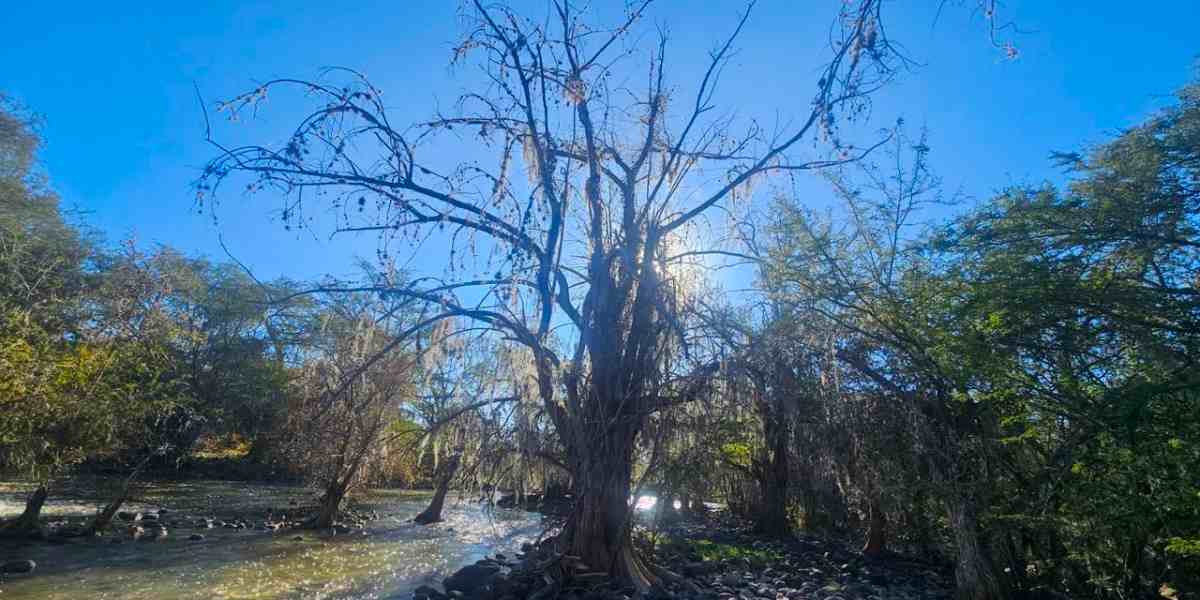
Dr. María Elena Pérez calls for the involvement of local authorities and communities in Durango to prevent the loss of sabinos, also known as ahuehuete trees . For centuries, ahuehuete trees—also known as sabinos—have been an integral part of Durango’s landscape, standing out as green corridors amid the semi-desert and visible from miles away.
Derived from the Náhuatl word āhuēhuētl, meaning “old man of the water,” these trees grow along riverbanks and form gallery forests—unique ecosystems that regulate local climate and sustain biodiversity.
However, their ecological value is increasingly under threat due to human activities such as water diversion, deforestation, and urban expansion. Specialists from the Centro Interdisciplinario de Investigación para el Desarrollo Integral Regional (CIIDIR), Durango Unit, of the Instituto Politécnico Nacional (IPN), emphasized the urgent need for diagnostic studies to establish effective strategies for the conservation and restoration of these so-called “green giants.”
Dr. María Elena Pérez López explained that the research team has focused on analyzing the behavior and current condition of this species to document the extent of its decline in recent years and to explore viable conservation alternatives.
During field surveys along riverbanks, the IPN research group documented severe degradation of the Tunal River—the closest river to the city of Durango—caused by channel straightening and reinforcement with rock, wastewater discharges, human settlements, deforestation for grazing and agriculture, among other factors.
Dr. Pérez López, together with CIIDIR researchers Diana Vázquez Altamirano and Ariana Elizabeth Arreola Ortiz, as well as specialist Fermín Ramírez Crescencio, identified five sites—though more may exist—where sabino die-off has occurred. The associated causes include river channel modification, human activities, dried-up springs, zero-flow conditions, and the use of wastewater for irrigation.
They also warned that rivers such as the Tunal, Durango, and Poanas have experienced significant reductions in flow due to human intervention, leading to the death of centuries-old trees across areas of up to four hectares.
“Recent studies show that rivers such as the Tunal, Durango, and Poanas in the state of Durango have lost flow as a result of human activities, including water diversion, deforestation, urbanization, and a lack of recognition of their ecological value.
“In some locations, centuries-old trees have died due to the drying up of springs and the loss of hydrological connectivity. Ironically, these are 400-year-old sabinos that, in less than a decade, we have managed to dry out,” the research team noted.
They further explained that the Tunal River and La Sauceda River, due to their proximity to the city of Durango, “exhibit the most severe damage along their riverbanks, where zero-flow conditions are frequent.”
In contrast, the Durango and Poanas rivers retain greater vegetation cover, which correlates with their greater distance from the urban area. “Nevertheless, they are also affected by water scarcity, as water is diverted for irrigation or retained in dams, leaving some areas without water for several months during the dry season or causing springs to dry up,” the researchers reported.
“The deterioration and loss of riparian forests stem from a lack of recognition and appreciation of the environmental services they provide, leading to neglect in river conservation. As a result, dead sabinos aged between 200 and 600 years can be found, underscoring the severity of the problem,” they warned.
The IPN research team stressed the importance of ensuring the effective implementation of ecological flow—the volume of water that must remain in rivers to maintain their natural functions—to protect this valuable natural heritage for future generations.
CIIDIR Durango specialists concluded that relevant authorities and the general public must address the degradation of sabino forests through diagnostic studies that support the development of effective conservation and restoration strategies. They also highlighted the importance of building on existing efforts supported by institutions such as Conahcyt—now the Secretariat of Science, Humanities, Technology and Innovation (Secihti)—which has provided funding for this research.
“One additional and fundamental aspect is involving local communities in the protection of these ecosystems, educating them about their importance, and promoting their participation in monitoring and stewardship.
“Ensuring the effective implementation of ecological flow is crucial. Significant efforts have already been made to determine appropriate flow levels, but only through coordinated and sustained action will it be possible to protect this invaluable natural heritage for future generations,” the researchers concluded.

INSTITUTO POLITÉCNICO NACIONAL
D.R. Instituto Politécnico Nacional (IPN). Av. Luis Enrique Erro S/N, Unidad Profesional Adolfo López Mateos, Zacatenco, Alcaldía Gustavo A. Madero, C.P. 07738, Ciudad de México. Conmutador: 55 57 29 60 00 / 55 57 29 63 00.
Esta página es una obra intelectual protegida por la Ley Federal del Derecho de Autor, puede ser reproducida con fines no lucrativos, siempre y cuando no se mutile, se cite la fuente completa y su dirección electrónica; su uso para otros fines, requiere autorización previa y por escrito de la Dirección General del Instituto.

