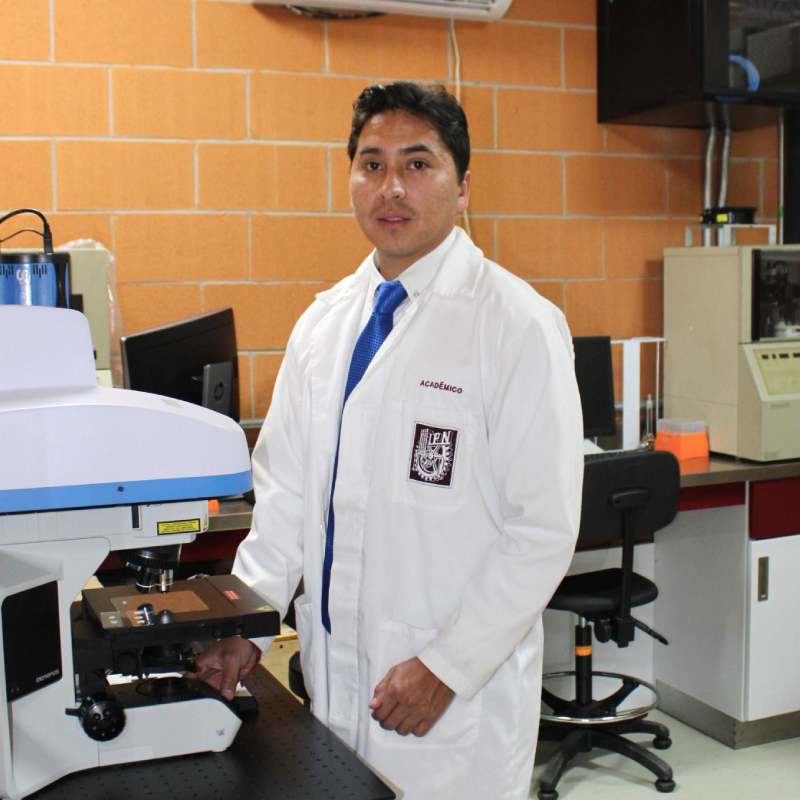
• At CIIDIR Durango, pharmacogenetic and pharmacokinetic techniques are applied to tailor drug doses to individual characteristics, reducing the adverse effects of chemotherapy
• More than 200 children with acute lymphoblastic leukemia have participated in therapeutic drug monitoring and genetic variant analysis related to drug metabolism
A personalized medicine model developed by Dr. Alonso Gándara Mireles of the Instituto Politécnico Nacional (IPN), which incorporates individualized studies, enables more effective and safer treatments for children with cancer.
The proposed approach—applied to more than 200 pediatric patients with acute lymphoblastic leukemia treated in various hospitals—integrates genetic analysis, therapeutic drug monitoring, and pharmacokinetic models (how drugs are absorbed, distributed, metabolized, and excreted in the body).
Gándara Mireles, who is conducting a postdoctoral fellowship at the Centro de Investigación para el Desarrollo Integral Regional (CIIDIR), Durango Unit, of IPN, explained that pharmacogenetics and clinical pharmacokinetics are disciplines that analyze how each patient’s genetic and biological characteristics influence the way the body processes medications.
This treatment model aligns with the initiative led by President Claudia Sheinbaum Pardo, supported by the Secretary of Public Education, Mario Delgado Carrillo, aimed at protecting children’s health while promoting education and science for a more prosperous and equitable Mexico.
The research has been consolidated as a multicenter model involving the National Institute of Pediatrics, the Maternal and Child Institute of Toluca, and the State Cancer Center in Durango, bringing research closer to clinical practice and strengthening a personalized medicine approach to improve treatment safety and the quality of life of pediatric patients. The specialist explained that the fundamental principle of personalized medicine is that, even when two patients share the same age or receive the same treatment, their genetic and physiological differences can lead to distinct drug responses; understanding these differences enables more precise and safer treatments.
Based on the data obtained from these studies, pharmacokinetic models can be developed to estimate how drugs are distributed and eliminated in each patient’s body, allowing treatments to be adjusted according to their genetic and biological characteristics.
“Acute lymphoblastic leukemia—the most common childhood cancer—requires combined, intensive, and prolonged chemotherapy, along with precise monitoring to maintain its effectiveness and reduce adverse effects,” he noted.
Gándara Mireles added that while these medications effectively eliminate cancer cells, they can also cause adverse effects in organs such as the heart, liver, or pancreas. Therefore, the goal is to calculate individualized doses that ensure safer and more effective treatments.
“This scientific tool can help determine whether the administered dose falls within the appropriate therapeutic range or whether there is a risk of toxicity or reduced efficacy, opening the possibility for individualized adjustments in oncological treatments,” he concluded.
For more information, visit www.ipn.mx

INSTITUTO POLITÉCNICO NACIONAL
D.R. Instituto Politécnico Nacional (IPN). Av. Luis Enrique Erro S/N, Unidad Profesional Adolfo López Mateos, Zacatenco, Alcaldía Gustavo A. Madero, C.P. 07738, Ciudad de México. Conmutador: 55 57 29 60 00 / 55 57 29 63 00.
Esta página es una obra intelectual protegida por la Ley Federal del Derecho de Autor, puede ser reproducida con fines no lucrativos, siempre y cuando no se mutile, se cite la fuente completa y su dirección electrónica; su uso para otros fines, requiere autorización previa y por escrito de la Dirección General del Instituto.