
By Claudia Villalobos | Photos: Javier González
By refining clinical diagnostic testing, researchers at Mexico’s Instituto Politécnico Nacional (IPN) are working to significantly improve the quality of life of people living with pollen allergies.
For more than a decade, Dr. Guillermo Guidos Fogelbach and Dr. César Augusto Sandino Reyes López, researchers at the Escuela Nacional de Medicina y Homeopatía (ENMH), have led an ambitious project aimed at transforming the diagnosis and treatment of allergies in Mexico. Their approach focuses on optimizing clinical testing and developing highly targeted therapies based on the specific substances that actually trigger allergic reactions in the Mexican population.
At the center of their research is a ubiquitous yet often overlooked element: pollen. Released by plants for reproduction, pollen travels through the air—particularly during dry and windy seasons such as fall and winter. While most people inhale these particles without consequence, an estimated 15 to 20 percent of the population develops allergic reactions, including persistent sneezing, nasal congestion, itchy eyes, throat irritation, and, in some cases, respiratory complications.
Through collaboration with hospitals and the Red Mexicana de Aerobiología, the team has identified the pollens that most significantly affect Mexico City residents. Their findings show that fewer than 20 types of pollen account for the majority of allergic cases in the capital.
Among the most significant contributors is the ash tree, a longstanding pillar of Mexico City’s urban green infrastructure. Native to central Mexico and valued for its resilience, the species was widely planted decades ago for ornamental and reforestation purposes. However, its high allergenic potential was not considered at the time, and it has since become one of the city’s primary sources of airborne biological particles.
From an allergenic standpoint, ash ranks first among species associated with respiratory health risks, followed by oaks and cypresses. Grasses and weeds—particularly amaranth and ragweed—also represent major sources of allergens.
Given the prevalence of these species in public spaces, Dr. Guidos emphasizes prevention and continuous pollen monitoring as essential tools for individuals with rhinitis or asthma. In a densely populated urban environment, exposure is virtually unavoidable.
Beyond identifying problematic pollens, the research team has moved toward molecular-level precision. Rather than simply detecting pollen sensitivity, they are isolating the specific proteins responsible for triggering allergic reactions. Although each type of pollen contains dozens of proteins, typically only one or two activate the immune system.
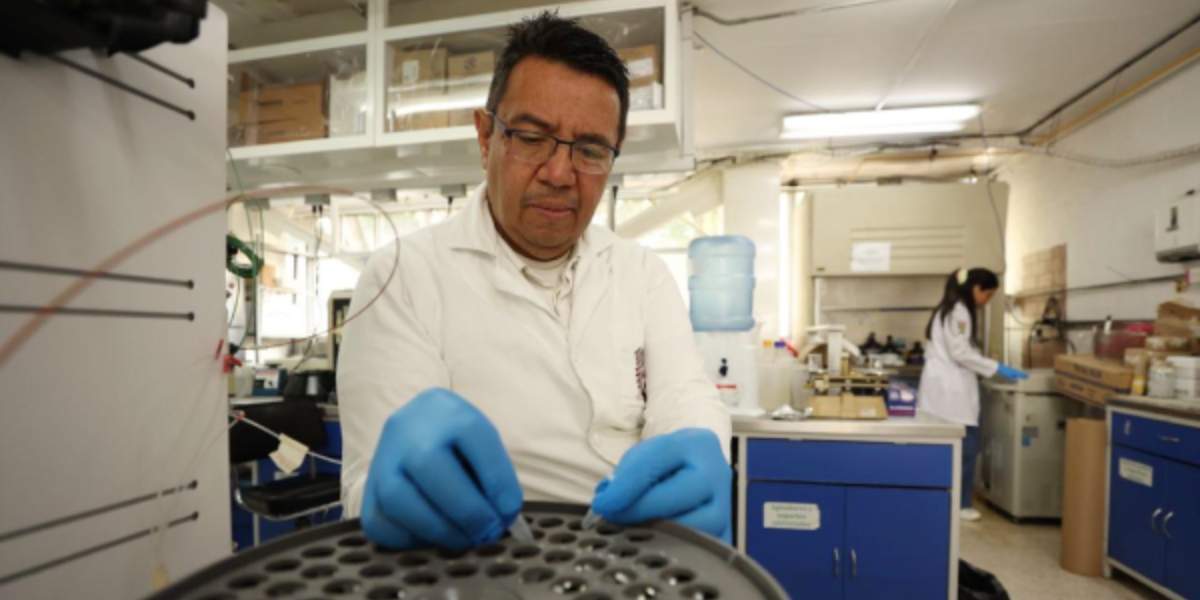
In the laboratory, these proteins are purified and analyzed using techniques such as ELISA and Western blot to observe how patients’ IgE antibodies respond to each component. This process enables the development of personalized allergy profiles and positions the IPN project as a significant contribution to the field of allergology.
This precision-based approach also addresses a longstanding clinical gap. Many hospitals rely on imported allergen extracts that do not correspond to Mexico’s native plant species, often resulting in less effective treatments. By contrast, Drs. Guidos and Reyes aim to develop tailored immunotherapies directed exclusively at the proteins responsible for each patient’s symptoms.
The researchers have also found that environmental factors, including air pollution, influence pollen behavior. Under certain conditions, trees may release pollen with minimal allergenic protein content; on other days, they emit high concentrations of highly allergenic proteins. This variability helps explain sudden spikes in allergy cases and underscores the importance of continuous environmental monitoring.
The project has completed in vitro studies and animal model testing and is now preparing to begin skin tests in patients at the Hospital General de México and the Hospital Juárez de México, in full compliance with ethical and regulatory standards. Clinical testing is expected to begin next semester, marking a decisive step toward direct medical application.
Backed by more than ten years of research, nearly a dozen peer-reviewed publications, and the training of new graduate specialists, the initiative demonstrates how scientific research can bridge the gap between laboratory discovery and everyday life. Ultimately, the IPN team’s work goes beyond understanding allergies—it seeks to enhance the well-being of thousands of individuals through more accurate diagnoses, personalized treatments, and more efficient use of public health resources.

INSTITUTO POLITÉCNICO NACIONAL
D.R. Instituto Politécnico Nacional (IPN). Av. Luis Enrique Erro S/N, Unidad Profesional Adolfo López Mateos, Zacatenco, Alcaldía Gustavo A. Madero, C.P. 07738, Ciudad de México. Conmutador: 55 57 29 60 00 / 55 57 29 63 00.
Esta página es una obra intelectual protegida por la Ley Federal del Derecho de Autor, puede ser reproducida con fines no lucrativos, siempre y cuando no se mutile, se cite la fuente completa y su dirección electrónica; su uso para otros fines, requiere autorización previa y por escrito de la Dirección General del Instituto.

